A buyer who empties their savings account to reach the closing table is taking a serious financial gamble. The next round of spending can begin within days of getting the keys.
According to research published by the National Association of Home Builders (NAHB) in 2026, buyers of existing homes spent an average of $18,673 on appliances, furnishings, repairs, and property alterations during their first year. Buyers of newly built homes spent even more, averaging $26,882.
Those numbers expose a weakness in how Americans calculate home affordability. Too much attention goes toward completing the purchase, leaving the financial demands of actually occupying the property dangerously underestimated.
The First Year Can Bring Nearly $27,000 in Additional Household Purchases and Projects

The NAHB’s analysis of consumer spending examined Consumer Expenditure Survey data collected between 2020 and 2023.
Researchers found that new homeowners consistently spent more on appliances, furnishings, and property work than established homeowners who hadn’t moved.
Here’s how the first-year spending compared:
| Expense | Existing Home Buyers | New Home Buyers |
| Appliances | $3,689 | $4,344 |
| Furnishings | $3,894 | $8,254 |
| Property alterations and repairs | $11,090 | $14,285 |
| Total first-year spending | $18,673 | $26,882 |
These figures represent average spending across the specified categories, including expenditures households might ordinarily make without moving.
A separate NAHB statistical analysis accounted for differences in household characteristics. It estimated that purchasing a home was associated with approximately $8,750 in additional first-year spending for buyers of newly built homes and $8,674 for existing-home buyers, compared with otherwise similar homeowners who stayed put.
That distinction matters. The purchase itself creates thousands of dollars in additional spending pressure, even after accounting for expenses that homeowners normally incur.
We think buyers should treat these figures as a warning about how quickly their financial position can change after closing.
New Construction Doesn’t Eliminate the Spending Problem
Newly constructed houses frequently create expensive shopping lists.
A buyer may move into a pristine property and immediately discover that the refrigerator, washer, dryer, window coverings, landscaping, or backyard fencing still need to be purchased.
NAHB’s research found that buyers of newly built homes spent an average of $1,089 on blinds, shades, and other window coverings during their first year. Sofas accounted for another $1,178 on average.
Outdoor improvements can be considerably more expensive.
Patios, walkways, driveways, fencing, and landscaping all contribute to the substantial first-year spending associated with newly constructed properties.
A new house deserves the same scrutiny of future expenses as an older one. Buyers should establish exactly which features and appliances are included in the contract and obtain prices for unfinished work before committing their available cash.
A beautifully furnished model home provides little information about the cost of occupying the actual property.
Older Homes Can Turn Repairs Into Immediate Financial Obligations
Existing homes present their own spending pressures.
Roofs deteriorate, plumbing develops leaks, heating equipment fails, and appliances approach the end of their useful lives. A buyer can inherit several expensive maintenance responsibilities simultaneously.
A 2026 American Home Shield survey of 1,004 homeowners found that 89% reported experiencing at least one problem during their first year of ownership.
Among respondents:
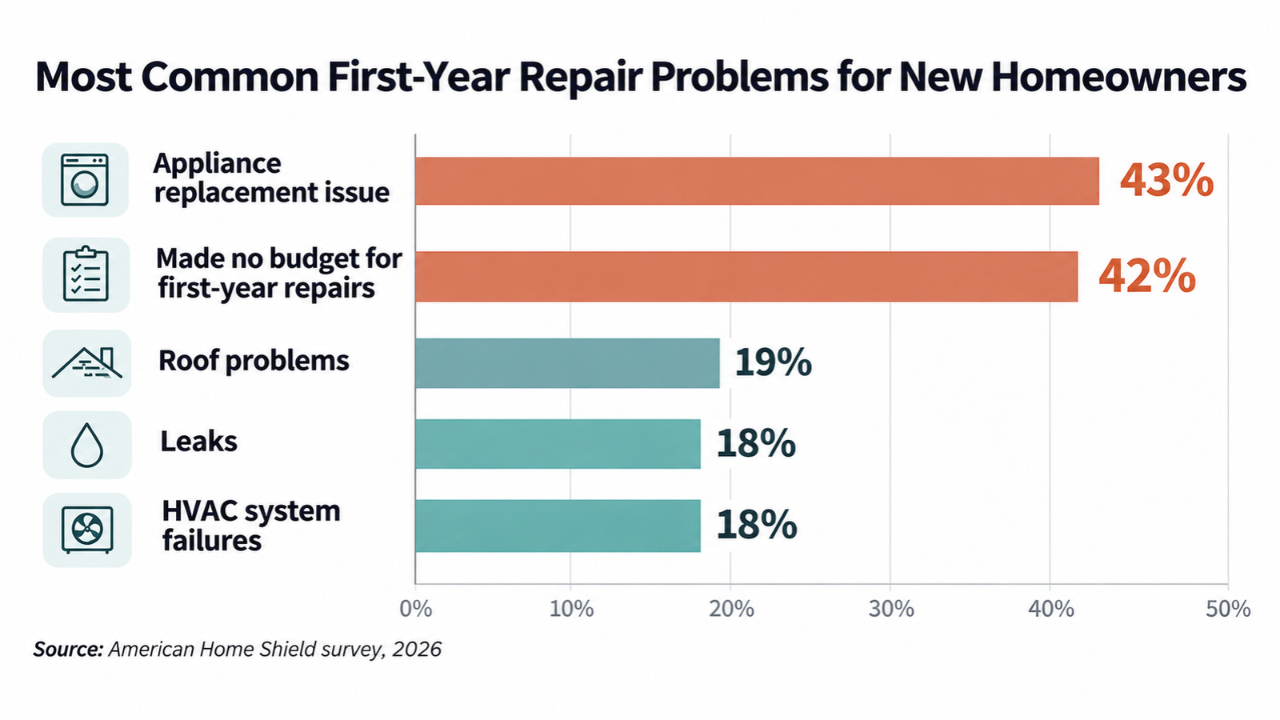
The survey also reported average out-of-pocket expenses of $5,061 among homeowners who paid for these problems. These are self-reported survey findings from a home warranty provider.
The 42% figure deserves particular attention.
Unexpected repairs already cause homeowners to postpone other improvements, as our reporting on repairs delaying planned home projects explains.
For a buyer with limited remaining savings, a failing water heater can become a credit card balance. A roof replacement can consume money intended for furniture, transportation, or ordinary family expenses.
We believe buyers should examine the age and condition of expensive home systems with the same seriousness they give the mortgage rate.
A house with several aging components warrants a larger repair reserve, regardless of how attractive the listing price appears.
The Mortgage Payment Is Only Part of the Monthly Commitment
First-year purchases create immediate pressure. Recurring ownership expenses keep that pressure alive.
An October 2026 Zillow and Thumbtack analysis estimated that maintenance, property taxes, and homeowners insurance cost the typical U.S. homeowner $16,566 annually.
View this post on Instagram
The estimated annual breakdown:
- Home maintenance: $11,171
- Property taxes: $3,129
- Homeowners insurance: $2,266
That works out to approximately $1,380 per month. These are modeled estimates, including a maintenance index based on Thumbtack project data, so individual household expenses can differ considerably.
Insurance deserves particular attention. Zillow’s analysis estimated that premiums had risen 54% over five years.
We’ve previously examined how sharply home insurance costs have risen, and the implications for household affordability are becoming difficult to ignore.
Property taxes and insurance are often included in mortgage escrow payments. The Consumer Financial Protection Bureau’s guidance also explains that homeowners may have association dues payable separately. Buyers should check exactly which expenses their monthly mortgage estimate includes to avoid double-counting.
HOA charges create another ongoing obligation. Our analysis found that nearly 44% of homes listed in 2025 carried reported association fees.
Affordability calculations need to include the entire ownership obligation, with room for future increases.
Two $400,000 Homes Can Require Very Different Cash Budgets

Consider two hypothetical buyers purchasing homes at identical prices.
Both pay $400,000, put 10% down, and incur assumed closing costs equal to 3% of the purchase price.
Each buyer needs $52,000 at closing:
- Down payment: $40,000
- Closing costs: $12,000
Their spending after closing creates a significant difference.
Buyer A: A Home Requiring Limited Immediate Work
First-year spending on moving, appliances, furnishings, and property work totals an assumed $7,500.
Total cash required through the first year: $59,500.
Buyer B: A Home Needing Several Substantial Updates
First-year spending on the same categories reaches an assumed $17,500.
Total cash required through the first year: $69,500.
These illustrative totals exclude mortgage payments and recurring taxes and insurance. The down payment represents cash converted into home equity, while the example measures cash needed to complete the purchase and cover subsequent expenditures.
The $10,000 difference emerges entirely from the households’ assumed post-closing needs.
We would be extremely reluctant to recommend any purchase that consumes the buyer’s entire cash reserve. A mortgage approval provides no protection against a broken furnace or an expensive plumbing problem.
Buyers Need a Budget That Extends Beyond Closing Day
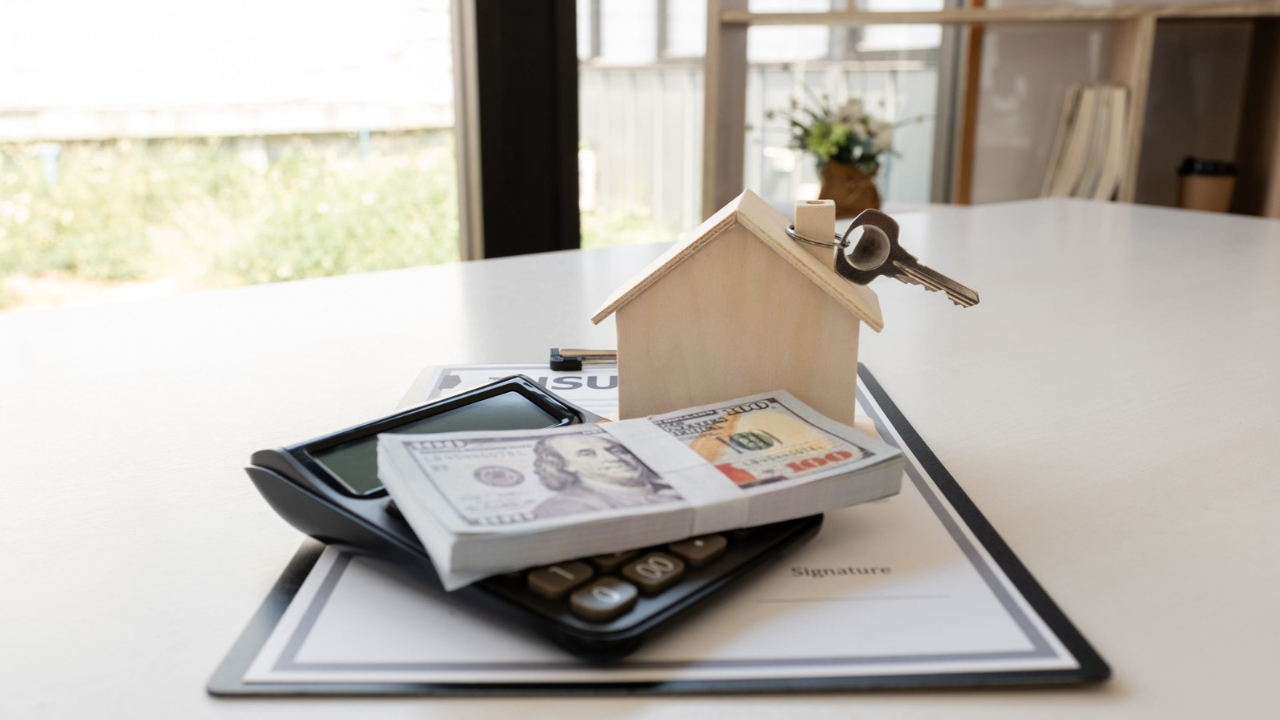
A credible purchasing budget should cover three distinct financial responsibilities.
- Money required to complete the transaction. This includes the down payment, closing costs, prepayments, and required escrow deposits.
- Money likely to be spent during the first year. Include moving, essential appliances, furnishings, maintenance, repairs, and any improvements that cannot reasonably be postponed.
- Cash that remains available for emergencies. Keep a separate reserve for unexpected property failures and household disruptions.
We would also challenge the temptation to begin expensive discretionary renovations immediately after moving in.
Our reporting on renovations that exceed their original budgets shows how quickly planned improvements can become more expensive than expected.
Buyers should investigate repairs first, establish realistic project costs, and keep enough money available for future problems.
That is especially important given the growing share of homeowners with no maintenance budget whatsoever.
The Real Purchase Budget Must Survive Year One
Buying a home is one of the largest financial commitments most households will ever make. The spending decisions that follow closing can determine whether that commitment remains manageable.
The NAHB figures demonstrate how substantial first-year spending can become. Buyers who ignore those expenses risk beginning homeownership with depleted savings and avoidable debt.
Our position is simple: a home purchase that leaves no financial room for the first year is already stretching the household too far. The right budget must survive the bills that arrive after the keys.