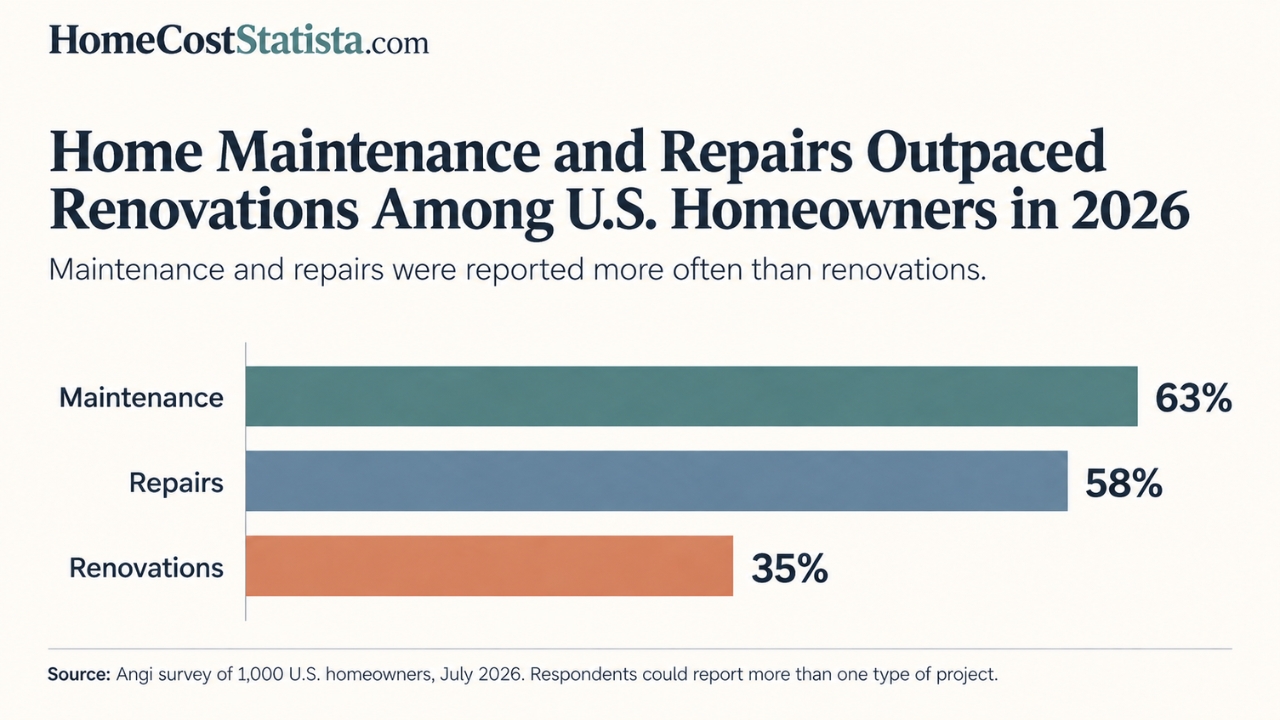
In July 2026, repairs appeared in 58% of recently active homeowners’ project histories. Renovations appeared in 35%. That gap exposes an expensive reality: houses dictate a large share of their owners’ spending priorities.
The figures come from Angi’s 2026 State of Home Spending Pulse. Maintenance reached 63%. Essential systems pose another budgeting challenge. Our concern is how quickly ordinary upkeep can erase money earmarked for improvements.
Repairs Are Taking Priority Over Renovations
Angi surveyed 1,000 American homeowners on July 9, 2026. Each had hired a professional for improvement, repair, or maintenance work within the preceding year. The percentages describe projects completed during the previous month, with multiple responses allowed.
The selected sample cannot establish the proportion of all U.S. homeowners who undertook repairs in 2026 or prove a nationwide collapse in renovation demand.
Within that group, however, the spending priorities are unmistakable: 63% reported maintenance, 58% repairs, and 35% renovations. The 23-point difference deserves attention from anyone planning a major project. Survey findings also describe participation, not how much each household spent.
We think the more troubling question is how many households have enough cash left for the repairs they know are coming. A functioning roof, safe wiring, and reliable heating remain obligations long after the appeal of a particular remodeling trend has faded.
A House Doesn’t Care About Your Renovation Plans

Homeowners can schedule a new bathroom six months ahead. A failed water heater sets its own deadline. Both projects frequently draw from the same savings account. Emergency work may also bring rushed decisions, limited contractor availability, and financing costs.
Consider a household with $12,000 reserved for a bathroom renovation. A sudden $5,000 heating repair leaves $7,000 available. Finishing the bathroom requires additional savings, a smaller scope, or borrowing.
Minor repairs also deserve a sensible response. Owners may be able to fix squeaky floors without dismantling the finished floor. A practical diagnosis can protect money earmarked for more serious problems.
Angi found that 23% of respondents who postponed a planned project attributed their delay to an unexpected or emergency project. Our reporting on repairs delaying planned home improvements explores how quickly one failure can displace other priorities.
Water intrusion, electrical hazards, leaks, and failing equipment warrant prompt assessment. Cosmetic projects need a spending plan that leaves room for emergencies.
The harshest budgeting mistake is committing every available dollar to a remodel before inspecting the systems that keep the home habitable. Those systems will eventually demand attention, with or without a convenient notice period.
Rising Costs Make the Choice More Difficult
A video report on renovation cost pressures illustrates the broader difficulties owners face when planning building and improvement work.
Data from the Home Improvement Research Institute puts a number on recent project spending. Average outlays among completed projects reached $5,368 in the first quarter of 2026, up from $3,957 in the equivalent quarter of 2025. Participation declined over that period.
The averages do not prove that an identical project became 36% more expensive. Changes in the mix or scope of completed projects can affect the result. They indicate more money committed per completed project. Even careful estimates can change when workers uncover concealed damage or outdated systems.
Angi found that 43% of surveyed homeowners who recently hired professionals exceeded their original estimates. Our analysis of professional projects going over budget discusses the exposure created by uncertain estimates.
For a $30,000 kitchen renovation, a final bill of $35,000 means finding another $5,000. A $38,000 bill requires $8,000 more. Those amounts strain budgets already carrying other housing costs.
We would reject any project plan that depends on a contractor’s opening quote being the final cost. The budget needs clear specifications, a defined scope, and a contingency funded before work begins. Uncommitted cash has real value in an aging house.
Older Homes Make Repairs Harder to Avoid
According to Harvard’s Joint Center for Housing Studies, the median age of U.S. homes reached 44 years in 2023, compared with 28 years in 1993.
🇺🇸 The median age of a U.S. home is a record 44 years, leading to vast and rapidly increasing maintenance and modernization costs.
Financial advisers now suggest setting aside 2% to 3% of a home’s value annually for upkeep, up from the traditional 1%.
https://t.co/00jZ2XVNTa
— Jack Hoogland (@jack_hoogland) April 5, 2026
Age alone is a poor measure of condition. A carefully maintained 70-year-old house may have newer major systems than a neglected 25-year-old property. Component ages, inspections, and maintenance records help identify upcoming costs.
Still, replacement cycles create predictable exposure. Roofing, electrical systems, plumbing, heating equipment, and water heaters have finite useful lives. Owners should price upcoming replacements before major discretionary commitments. A roof nearing replacement age should appear on the financial calendar years before failure.
For recent buyers, the expenses that arise after closing can place additional pressure on savings already reduced by the down payment and purchase costs.
One public discussion of aging-home costs advocates higher percentage-based maintenance reserves. We prefer budgets built around actual conditions, expected replacement dates, and local repair prices. A blanket percentage cannot predict the timing of a specific failure.
The savings situation looks especially concerning alongside research on homeowners without maintenance budgets. Hippo found that 18% of surveyed homeowners set no maintenance budget in 2025, twice the 9% reported for 2024.
A zero-dollar reserve leaves major repairs competing with everyday expenses.
Renovations Haven’t Lost Their Appeal
A smaller renovation share in one monthly survey cannot settle the direction of the entire improvement market. Angi also found that 66% of respondents expected to make a major home investment within five years. Demand for better kitchens, bathrooms, and living spaces clearly remains.
Timing is the critical variable. A homeowner can value a renovated kitchen and still decide that replacing an aging roof deserves this year’s cash. That choice protects the property and preserves options for later improvements.
There is no rule requiring every renovation to deliver a positive resale return. Better accessibility, a more useful floor plan, and everyday comfort have legitimate household value. Homeowners should be able to enjoy the homes they occupy. Protecting that freedom requires adequate reserves for less enjoyable obligations.
The problem begins when preferences outrank safety and structural concerns. We would challenge any advice encouraging owners to drain emergency savings for finishes chosen mainly for appearance.
Start with the home’s condition, prioritize everyday usefulness, and sequence remaining work around available cash.
We Would Keep Repair Money Separate From Renovation Money

A single home-improvement account makes it too easy to spend future repair funds on visible upgrades. Give every expense a purpose, even within one bank account.
- Routine maintenance: Regular servicing, inspections, gutter cleaning, and preventive work intended to limit deterioration.
- Repairs and replacements: Funds for failed components, urgent damage, and major systems approaching the end of their useful lives.
- Renovations: Planned changes to appearance, layout, comfort, accessibility, or market appeal.
The first two categories should have priority over optional purchases whenever reserves are thin. A kitchen countertop can wait for a suitable budget. A dangerous electrical defect requires immediate professional attention.
Association fees complicate the calculation for some owners. Our coverage of homes listed with HOA fees shows how commonly dues accompany property ownership. Dues may exclude interior repairs and major shared expenses. Read the governing documents and assess special-assessment exposure.
Suppose a family sets aside $400 each month for home expenses, creating $4,800 over a year. We would allocate that amount using a written schedule of inspections, likely replacements, and current emergency savings. A separate renovation target would follow. A reserve should reflect the next five to ten years of foreseeable work.
Major renovations also require contingencies. Our analysis of renovations exceeding their budgets shows how substantial overruns can become. A 30% increase on a $20,000 project adds $6,000, enough to disrupt another necessary purchase.
Percentage-based formulas are rough starting points. Use inspections and priced replacement plans. A home’s market price is not a reliable timetable for equipment failure, and household finances vary enormously.
The Real Story Is About Homeownership Priorities
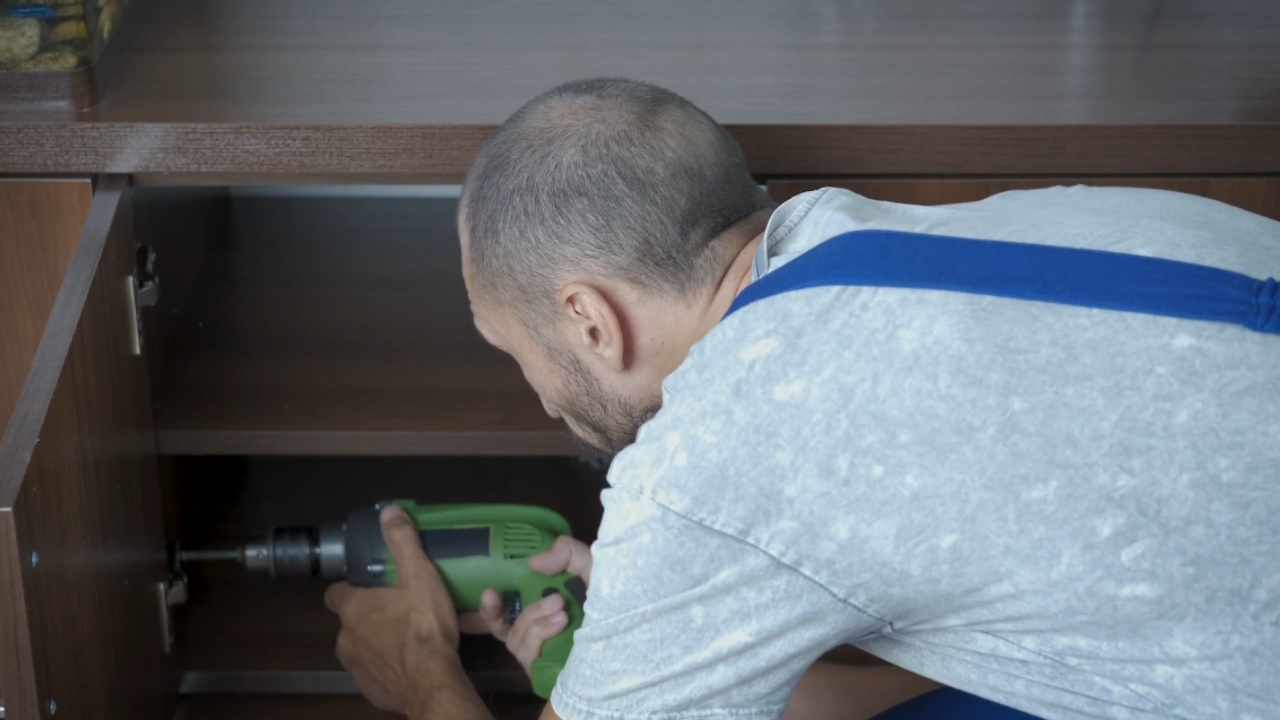
The repair and renovation figures describe the pressure facing people who are actively paying professionals to work on their homes. They also expose a weakness in the way ownership costs are often discussed.
Purchase prices and mortgage payments attract endless attention. The reserves needed to maintain a house receive far less. That is a serious gap in homeownership planning. Planning ahead prevents a failed component from dictating a family’s next loan.
The sensible response is straightforward: inspect the property, price foreseeable replacements, protect repair savings, and authorize renovations with money genuinely available for them. Every attractive improvement deserves a place in the plan only after the essentials are covered.
For homeowners working with a constrained budget, the next responsible home project may be one that nobody visiting the house will ever notice.