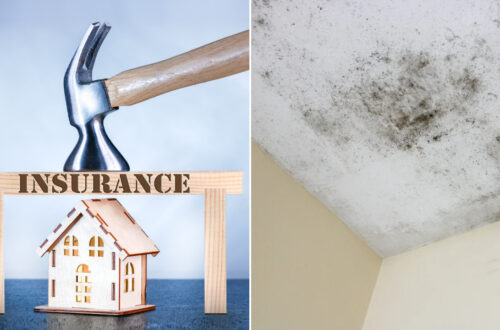

Two homeowners can insure identical houses, choose the same coverage, and face dramatically different insurance premiums. Their credit histories can account for thousands of dollars in annual price differences.
A 2025 Consumer Federation of America analysis found that homeowners with low credit scores received insurance quotes averaging $1,996 more annually than otherwise identical homeowners with high credit scores.
We consider that an extraordinary penalty for a financial history that says nothing directly about the condition of someone’s roof, wiring, or foundation.
The Same Coverage Can Cost Almost Twice as Much
The Consumer Federation of America (CFA) and Climate and Community Institute examined modeled homeowners insurance quotes using data from Quadrant Information Services.
Their findings exposed the scale of credit-based pricing.
| Credit profile | Additional annual premium | Increase |
| High credit | Baseline | — |
| Medium credit | $792 | 39% |
| Low credit | $1,996 | 99% |
Figures represent national averages from modeled insurance quotes, compared with the high-credit profile. Individual premiums vary.
The researchers found that low-credit homeowners faced premiums at least twice as high as their high-credit counterparts in 23 states.
These were modeled quotes generated from insurer rate filings, with other rating factors held constant. An independent examination of the findings reported that the dataset included 608,105 test quotes. Insurance industry representatives challenged the methodology, pointing out that final customer premiums can differ from modeled quotes.
A separate 2026 National Bureau of Economic Research study, examining approximately 70 million policies linked to mortgages, found that homeowners with low credit paid 24% more for identical coverage than those with high credit.
The studies use different datasets and methods, explaining some of the difference in their estimates. Both establish that credit history can materially influence the price of protecting the same property.
We believe the 24% finding is troubling enough on its own. A homeowner paying $2,500 annually would face an additional $600 at that percentage difference. Five years at that unchanged rate would consume another $3,000.
That money could have gone toward maintaining the property insurers are supposedly trying to protect.
Why Insurers Are Interested in Your Credit History

Insurers have been using credit information to evaluate customers for decades.
According to the National Association of Insurance Commissioners, FICO estimates that approximately 85% of homeowners insurers use credit-based insurance scores in states where the practice is permitted.
These insurance scores differ from the credit scores lenders typically use. They are developed to predict insurance losses and draw on information that can include:
- Payment history and overdue accounts.
- Outstanding debt and credit utilization.
- Length of credit history.
- Applications for new credit.
- Types of credit accounts.
Insurance companies argue that these patterns help predict how frequently consumers will file claims and how costly those claims may become.
There is statistical evidence supporting a relationship between credit information and insurance losses. We acknowledge that insurers have a legitimate interest in measuring risk accurately.
However, statistical relationships deserve scrutiny when they determine access to an essential financial product.
A homeowner who carries substantial credit-card debt may have recently paid for a major home repair. Someone with an excellent credit history could own an aging property with neglected plumbing and deteriorating electrical systems.
Credit scoring works with broad patterns. Individual homes still have individual risks.
Our objection is to the enormous financial weight that some insurers place on a homeowner’s credit profile. A predictive variable should face serious scrutiny when it creates such large differences in premiums for identical coverage.
Credit Can Matter as Much as the Disaster Risk Around Your House
The most revealing finding from the CFA research concerned the relationship between credit scores and natural-disaster exposure.
Researchers found that a low-credit homeowner in an area at the first percentile of disaster risk could face a premium comparable to that of a high-credit homeowner in an area at the 71st percentile.
New research shows “home insurers consider the credit score of the homeowner more important than the location of the home in setting prices… On average across the nation, it is more expensive to have a poor credit score than to live in a zip code with a high disaster risk.” https://t.co/3flunUSr2O
— Jathan Sadowski (@jathansadowski) August 21, 2025
Think about what that means. A homeowner living in a relatively low-risk community may face an insurance bill comparable to someone exposed to substantially greater natural hazards.
To us, that raises a fundamental question about pricing priorities.
Insurers have substantial reasons to charge more for properties exposed to hurricanes, wildfires, hailstorms, and flooding. They also need to account for rebuilding costs and the characteristics of individual buildings.
Those pressures are already substantial. Our previous examination of rising home insurance costs documented how severely premiums have increased in recent years.
Credit-based pricing adds another layer to an increasingly expensive obligation.
We believe lawmakers should demand much stronger evidence for the size of these penalties and require insurers to demonstrate that their pricing produces fair outcomes.
Financial Problems Can Create a Second Insurance Problem

Consider a homeowner facing an unexpected $8,000 HVAC replacement.
The homeowner uses a credit card to cover the expense. Credit utilization rises, and the household needs time to repay the balance.
Depending on state rules and the insurer’s scoring practices, that increased debt could eventually contribute to a less favorable insurance score.
One emergency has now created the possibility of another recurring expense.
Our reporting on unexpected repairs delaying home projects illustrates how quickly an unplanned repair can disrupt household finances.
The situation becomes more concerning when emergency savings are limited.
We previously reported that the share of homeowners without maintenance budgets doubled to 18% in a recent homeowner survey.
For households already struggling to accumulate savings, higher insurance premiums can reduce the money available for future repairs.
This creates an especially damaging financial cycle:
Emergency repair → Higher debt → Potential insurance penalty → Less money available for maintenance.
The insurance penalty is conditional on applicable laws and insurer practices. The financial vulnerability created by this cycle is entirely real.
We find it difficult to defend a system that can make insurance more expensive precisely when a household has fewer resources to maintain its home.
State Laws Produce Very Different Outcomes

Credit-based insurance pricing is far from universal.
California, Maryland, and Massachusetts prohibit insurers from using credit history to determine homeowners insurance premiums. Other states impose various limitations on how insurers may consider credit information.
Maryland’s homeowners insurance regulations, for example, prohibit using credit history to establish rates, assign pricing tiers, or determine certain coverage decisions.
Elsewhere, credit information may legally influence premiums, subject to applicable consumer protections.
This uneven treatment deserves attention.
A homeowner’s state of residence can determine whether their credit history becomes an additional insurance expense.
We believe that is a serious policy inconsistency. If credit-based pricing deserves restrictions in certain states, regulators elsewhere should investigate the effects on affordability and consumer access to coverage.
At a minimum, the industry should face greater transparency requirements concerning the financial consequences of insurance scoring.
What Homeowners Should Ask Before Their Next Renewal
Consumers have limited influence over an insurer’s rating formula. They can still challenge inaccurate information and compare prices more effectively.
Four questions deserve particular attention:
- Does my insurer use credit information? Ask whether a credit-based insurance score influences your premium and which factors are affecting your rate.
- Is my credit report accurate? The Consumer Financial Protection Bureau explains how consumers can obtain free credit reports and dispute mistakes. Errors can create unnecessary financial consequences.
- Can my policy be re-rated? Ask whether corrected credit information or an improved insurance score can qualify you for a lower premium. Requirements vary by state.
- Are competing quotes truly comparable? Compare dwelling coverage, replacement-cost provisions, deductibles, exclusions, and liability limits alongside the premium.
Consumers who receive an adverse insurance decision based on a consumer report may also have rights to notice and a free copy of the report used.
We would strongly discourage homeowners from sacrificing essential protection simply to obtain a cheaper premium.
As our examination of insurance claim payments and lender control demonstrated, even properly insured homeowners can experience major financial complications after property damage.
Weakening coverage creates an additional vulnerability.
Our Take Is That the Credit-Based Insurance Penalties Need Tougher Scrutiny
View this post on Instagram
The evidence establishes that credit history can influence homeowners insurance prices substantially, even with identical coverage.
We believe the industry has allowed financial profiling to acquire too much influence over the cost of protecting a home.
Insurers should face stricter requirements to justify credit-related premium differences, disclose their effects, and prevent disproportionate penalties on financially vulnerable households.
The price of insuring a house should primarily reflect the risks associated with protecting that house. Homeowners deserve a system that gives those risks the weight they warrant.