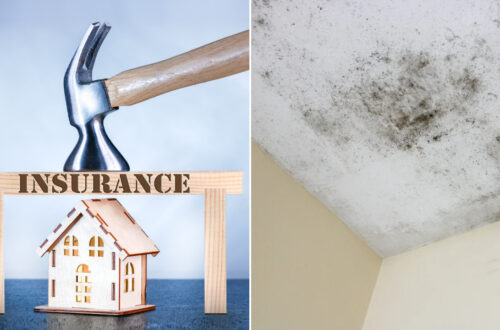

A homeowner can have a $90,000 insurance claim approved and still struggle to find the money to begin repairs.
The insurer agrees to cover the damage. The settlement check arrives. Then the mortgage company steps in, requiring its endorsement and potentially controlling when the repair money becomes available.
We believe this is one of the most poorly understood financial risks in homeownership. An approved insurance claim can leave a homeowner facing a serious cash-flow problem at precisely the moment repairs are most urgent.
Why Your Mortgage Company Appears on the Insurance Check

Most homeowners discover this arrangement after something has already gone wrong.
According to the Consumer Financial Protection Bureau’s explanation of insurance payouts, insurers generally issue structural-damage settlement checks payable to both the homeowner and the mortgage lender or servicer.
The mortgage company has a financial interest in the property. A damaged house represents weakened collateral for the outstanding loan.
Consequently, mortgage agreements commonly allow lenders to oversee how insurance proceeds are used.
The Office of the Comptroller of the Currency confirms that mortgage documents generally authorize banks to monitor repairs and verify completed work before releasing insurance funds.
We understand the financial reasoning. A lender needs assurance that a severely damaged property will be restored.
Our objection concerns how easily that protection can shift repair-financing pressure onto the homeowner.
The household needs a functioning roof, safe electrical systems, and livable rooms. The mortgage company needs documentation and assurance that its collateral is protected.
Those priorities frequently operate on different schedules.
The Bank Can Release Your Settlement in Stages
View this post on Instagram
Receiving an insurance settlement does not necessarily give homeowners immediate access to the entire payment.
Mortgage servicers commonly release part of the funds initially, retain the remainder, and authorize additional payments as repairs progress.
The precise process depends on the mortgage, loan status, applicable servicing guidelines, and state law.
Under Fannie Mae’s insured-loss servicing rules, servicers handling loans that were current or less than 31 days delinquent when the loss occurred may initially release up to the greatest of:
- $40,000.
- 33% of the insurance proceeds.
- Certain amounts exceeding the outstanding loan balance, accrued interest, and advances.
These are permitted initial-disbursement limits, subject to the applicable rules. They do not guarantee a homeowner will receive a particular amount immediately.
Remaining funds can be released as repairs advance, with inspections and documentation used to monitor the work.
Fannie Mae also requires undistributed proceeds to be held in an interest-bearing account for the borrower’s benefit, with rules governing payment of that interest.
These safeguards offer some protection. Yet homeowners can still face an expensive gap between receiving approval and securing enough cash to pay their contractors.
A $90,000 Claim Can Still Leave a $10,000 Shortfall

Consider an illustrative situation. A storm causes $90,000 in covered structural damage to a mortgaged home. The insurer issues the approved payment, and the mortgage servicer places the funds under its control.
Suppose the servicer initially releases $25,000, with $65,000 scheduled for later disbursements as repairs progress.
The contractor requires $35,000 to purchase materials, schedule workers, and begin the job. The homeowner now faces an immediate $10,000 funding gap.
The insurance settlement may ultimately cover the approved work, but the contractor needs more cash than the first release provides.
That homeowner might have to negotiate a smaller deposit, request an additional disbursement, or temporarily finance the difference.
This example illustrates the cash-flow problem; actual disbursements and contractor payment arrangements vary.
We think homeowners should be particularly concerned about arrangements that make them finance insured repairs while substantial settlement funds sit in a controlled account.
The problem becomes more serious when a damaged home needs emergency work to prevent further deterioration.
Your Mortgage Status Can Change the Rules
A homeowner’s payment history can affect how insurance proceeds are distributed. For Fannie Mae loans that were at least 31 days delinquent when the insured loss occurred, the servicing rules impose tighter controls.
For proceeds exceeding $5,000, the rules authorize a limited initial payment and subsequent disbursements in increments no greater than 25% of the proceeds following repair inspections.
This creates a potentially difficult situation. A financially stressed homeowner may have fewer resources to advance repair expenses while facing stricter release conditions.
Meanwhile, Freddie Mac’s disaster servicing guidance instructs servicers to distribute claim proceeds without delay while following its requirements.
That principle matters.
Holding repair money should never become an excuse for administrative inactivity.
A lender’s right to protect collateral carries a corresponding responsibility to process legitimate repair payments efficiently.
Some Insurance Payments Should Remain Under Your Control
Homeowners also need to distinguish structural-repair proceeds from other insurance benefits.
According to the South Carolina Department of Insurance, insurance payments for additional living expenses should be made directly to the policyholder.
These payments can cover qualifying temporary living costs while repairs are underway.
Personal-property claims generally involve separate payments as well.
This distinction deserves attention after a major loss, particularly when several checks arrive at different stages.
The consumer advocacy organization United Policyholders explains in its guidance on accessing insurance proceeds that mortgage companies are not entitled to control personal-property and temporary-living-expense benefits as though they were structural repair funds.
Homeowners should inspect every settlement check and ask for corrections when an inappropriate payee appears.
What Homeowners Should Demand Before Repairs Begin

We believe mortgage servicers should provide a written disbursement schedule as soon as they receive notification of a substantial insured loss.
Homeowners should request the initial release amount, required documents, inspection process, conditions for subsequent payments, and expected processing times.
They should also establish whether contractors can receive joint checks or direct payments under the servicer’s procedures.
Every request, document submission, and conversation should be recorded.
If a servicer unreasonably delays payment or fails to explain its requirements, homeowners can use the CFPB’s mortgage-information request process to seek information or dispute a servicing error through the designated written-request channel.
Formal requests carry response obligations, although the applicable deadlines and protections depend on the circumstances.
Preparation matters, especially given how unexpected repairs disrupt home projects and force households to rearrange their finances.
A homeowner who understands the claim-payment process before hiring a contractor has a better chance of avoiding expensive surprises.
The Mortgage Payment Usually Continues
There is another financial obligation that deserves attention. Your regular mortgage payment generally remains due while the insurance claim is being processed and repairs are underway.
For households already struggling with rising home insurance costs, that creates additional financial pressure.
Some disaster-affected borrowers may qualify for mortgage assistance or forbearance. Those arrangements require coordination with the servicer, and borrowers should understand their repayment terms.
This is especially worrying when 18% of homeowners lack maintenance budgets and many households have limited reserves for unexpected property expenses.
A large insurance settlement offers little immediate financial comfort when the money needed to restore the home remains inaccessible.
Approved Claims Need a Faster Path to Repairs

Mortgage lenders have legitimate reasons to oversee structural repairs. They also have the resources and servicing systems to make that process far less burdensome.
We believe every substantial claim should come with transparent release requirements, prompt decisions, and a clear explanation whenever money is withheld.
Homeowners have already suffered the property damage. They should not have to fight through another financial obstacle simply to access funds designated for rebuilding.
An insurance settlement only achieves its purpose when the approved money can actually be used to restore the property.