

Hiring a professional should bring greater control to a home improvement project. Yet Angi’s 2026 spending research found that 43% of homeowners who recently hired a professional spent more than their original estimate. Altogether, 92% finished at or above budget.
The survey covered 1,000 U.S. homeowners who hired professionals for improvements, repairs, or maintenance projects during the previous 12 months.
That distinction matters. The same research found that home repairs were more common than renovations, with 58% reporting recent repairs and 35% reporting renovations.
Our concern is how easily homeowners mistake professional involvement for financial protection. A contractor can provide valuable expertise while a project accumulates thousands of dollars in additional costs.
The homeowner remains responsible for deciding how much uncertainty the household can afford.
Hiring a Pro Does Not Turn an Estimate Into a Guarantee

A contractor’s estimate reflects the work that can reasonably be assessed and priced before construction begins.
That assessment has limits, particularly in older homes.
A kitchen renovation may uncover damaged subflooring. Removing bathroom tile can expose deteriorated plumbing. Electrical work may reveal outdated wiring that requires additional upgrades.
These discoveries can change the price significantly.
The more concerning situation involves an estimate that appears complete while leaving major parts of the project undefined.
A contractor might provide a $35,000 quotation with insufficient allowances for materials, vaguely described electrical work, and exclusions that receive little attention during the initial conversation.
Every unresolved detail creates another opportunity for the final invoice to increase.
We would be particularly cautious about accepting an estimate that leaves substantial costs to be determined after demolition begins. The worst time to discover the real price of a renovation is when the house is already torn apart.
Nearly Everyone Renovating Already Uses Professionals
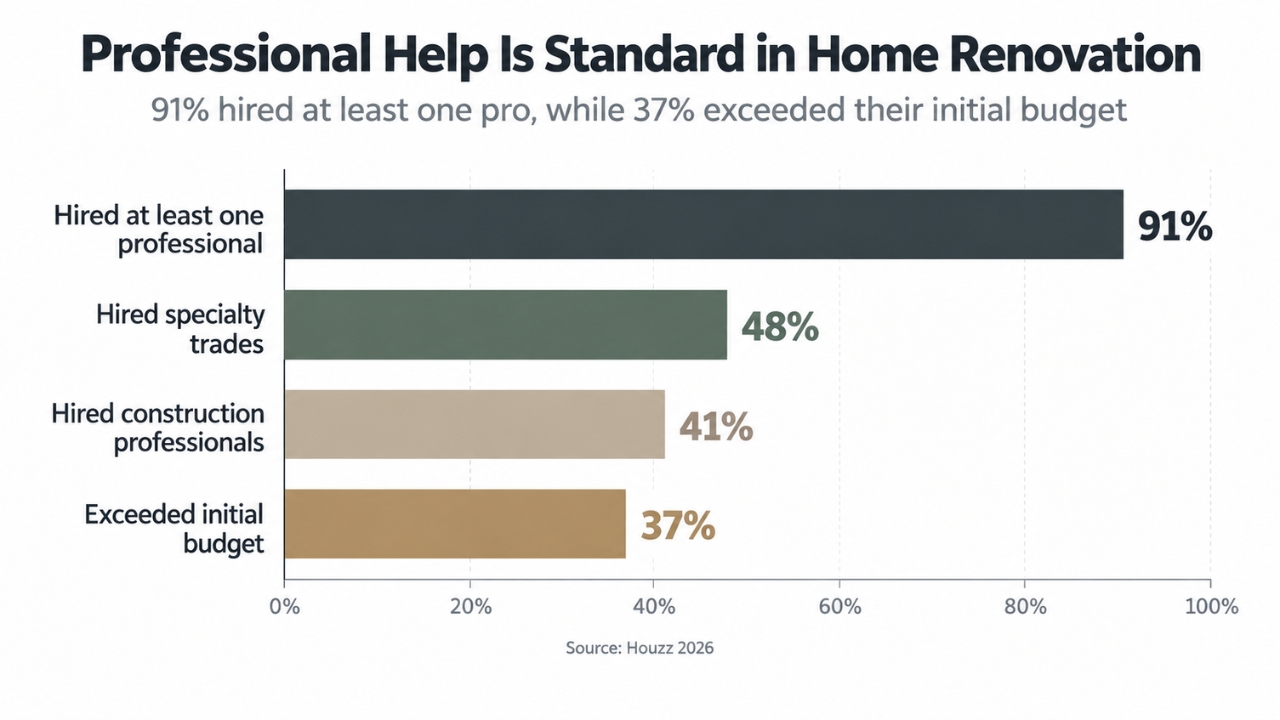
Professional involvement is already the standard approach to residential renovation.
According to Houzz’s 2026 remodeling trends, 91% of homeowners who renovated in 2025 hired at least one professional.
The research also found that:
- 48% hired specialty trades, including electricians, plumbers, HVAC professionals, painters, and carpenters.
- 41% hired construction professionals, including general contractors, builders, and design-build firms.
Meanwhile, the 2026 Houzz & Home Study found that 37% of renovating homeowners exceeded their initial budgets.
These surveys measure different populations. Angi examined recent homeowners who hired professionals for improvements, repairs, or maintenance. Houzz examined homeowners undertaking renovations, including projects involving professional and DIY work.
Consequently, the two overrun percentages should be interpreted separately. Neither establishes that hiring professionals causes budget overruns.
The larger lesson is still uncomfortable: professional participation is widespread, and renovation budgets remain remarkably vulnerable.
You Are Paying for Expertise
A capable contractor should improve cost forecasting through accurate measurements, realistic labor estimates, knowledge of building requirements, and experience identifying potential complications.
That expertise is worth paying for.
However, homeowners should distinguish between complications that were genuinely difficult to anticipate and expenses that should have been included from the beginning.
Consider a bathroom renovation initially estimated at $28,000.
Demolition reveals extensive water damage beneath the flooring. Additional repairs become necessary, increasing the project’s cost.
Depending on the source of the damage, the homeowner may also encounter mold remediation expenses. Insurance coverage for hidden mold depends on the cause of the moisture and the policy’s terms.
Such discoveries deserve a documented explanation of the additional work and associated cost.
By comparison, ordinary demolition, disposal, or required installation materials should generally be addressed during the estimating process.
Our view is that contractors should be accountable for the assumptions behind their estimates. Homeowners should insist on understanding those assumptions before committing their money.
A Professional Estimate Should Tell You More Than the Total
A contractor’s total price is often the first number homeowners examine. The details supporting that number deserve just as much scrutiny.
The Federal Trade Commission’s guidance on hiring home improvement contractors recommends obtaining multiple written estimates that describe the work, materials, completion date, and price.
View this post on Instagram
The FTC also advises homeowners to question substantial differences between estimates and avoid automatically choosing the lowest bid.
Consider two contractors proposing the same kitchen renovation:
| Estimate | Quoted Price |
|---|---|
| Contractor A | $41,000 |
| Contractor B | $47,000 |
Contractor A’s proposal excludes debris disposal, contains low allowances for fixtures, and leaves electrical modifications unresolved.
Contractor B includes those items with clearly defined materials and labor.
The apparent $6,000 saving deserves serious scrutiny.
A low estimate with major omissions can become an expensive contract.
Before signing, homeowners should ask each contractor to explain exactly what is included, which expenses remain provisional, and what circumstances would require additional payment.
Allowances Can Make a Budget Look Firmer Than It Is

Allowances are among the easiest places for renovation costs to escape the original budget.
An allowance reserves a specified amount for a product, material, or service that has yet to be finalized.
Suppose a renovation contract includes a $4,000 flooring allowance.
The homeowner eventually selects flooring that costs $6,500 installed.
The project is now $2,500 more expensive.
The additional spending may arise entirely from the homeowner’s selection. Delivery, installation, taxes, and contractor markup can also affect the final cost, depending on what the allowance covers.
This is why allowances deserve careful review before construction begins.
We would want major selections finalized wherever practical, especially cabinets, countertops, flooring, appliances, and fixtures.
Homeowners should also ask whether each allowance reflects an actual supplier quotation or a preliminary estimate.
An allowance that is substantially below the cost of the products a homeowner intends to purchase makes the overall quotation artificially reassuring.
Change Orders Are Where the Original Budget Starts Moving
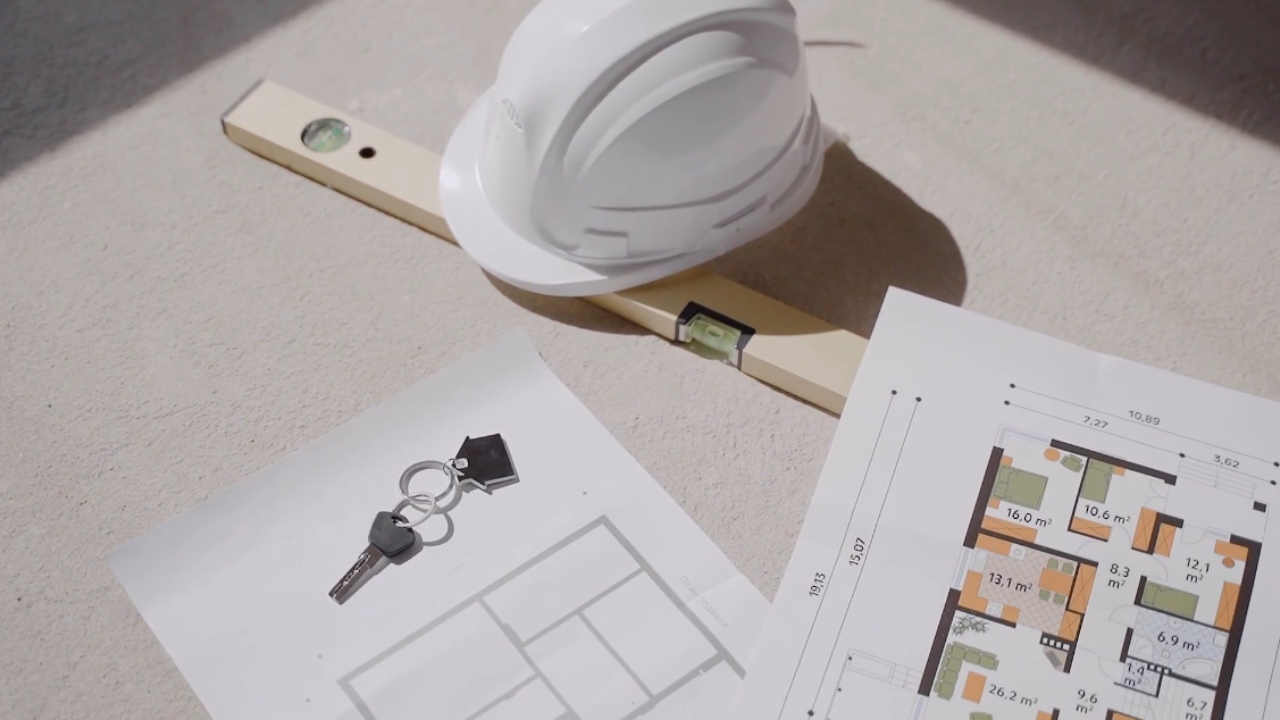
Change orders modify the originally agreed scope of work.
They can arise from concealed damage, building requirements, design revisions, or homeowners deciding to add features while construction is underway.
Each change may appear manageable on its own.
Consider three additions during a renovation:
| Change | Added Cost |
|---|---|
| Additional electrical outlets | $1,200 |
| Upgraded flooring | $1,800 |
| Expanded cabinetry | $2,400 |
| Total additional spending | $5,400 |
A project initially priced at $45,000 now costs $50,400, before any other adjustments.
That represents a 12% increase.
Our position is straightforward: Every approved change order should immediately become part of the working budget.
Homeowners should require written documentation identifying the added work, cost, and any effect on the completion schedule.
Verbal agreements and loosely tracked extras create unnecessary financial risk.
The cumulative total matters far more than whether an individual addition seems affordable.
Professional Work Can Also Mean Bigger Projects
Hiring professionals often accompanies substantial renovation spending.
Houzz found that 31% of renovating homeowners spent at least $50,000 on their projects in 2025. That included 17% who spent $100,000 or more.
At those spending levels, relatively modest percentage increases become significant household expenses.
| Original Project Budget | 10% Overrun | Final Cost |
|---|---|---|
| $15,000 | $1,500 | $16,500 |
| $75,000 | $7,500 | $82,500 |
| $150,000 | $15,000 | $165,000 |
Angi’s research also found that more than one-third of homeowners who exceeded their estimates spent at least 30% more than planned.
We examined those larger overruns in our earlier report on over-budget renovations.
A 30% increase on a $75,000 project would mean another $22,500.
That amount can exhaust savings, create additional borrowing needs, or force a homeowner to abandon other financial priorities.
The scale of these potential overruns makes detailed planning essential, particularly for projects involving structural changes, complex installations, or older properties.
Do Not Confuse a Contractor Budget With Your Household Budget
One of the most dangerous renovation budgeting habits is treating the contractor’s estimate as the household’s entire spending allowance.
Suppose a contractor quotes $40,000.
A homeowner with exactly $40,000 available has no financial flexibility if the project encounters additional expenses.
A household that establishes a separate contingency fund has more options.
For example, setting aside another $6,000 would provide a 15% reserve and create a potential total project allowance of $46,000.
The appropriate reserve depends on the project, including its complexity, the building’s age, and how much work remains concealed before construction.
We would consider a contingency of roughly 10% to 20% a useful starting point for many renovations, with greater reserves potentially justified when uncertainty is substantial.
Financing adds another consideration.
Homeowners who use a second loan to fund improvements must account for the additional monthly payments and borrowing costs.
They should also protect funds needed for ongoing maintenance.
That becomes especially important when research indicates a growing share of homeowners have no home maintenance budget whatsoever.
A renovation that consumes every available dollar leaves the household financially exposed to the next repair.
We would strongly favor reducing the initial project scope before accepting that level of vulnerability.
Payment Schedules Matter Too

The timing of payments can significantly influence a homeowner’s financial exposure.
A contractor may require a deposit, followed by payments tied to specific project milestones.
A reasonable schedule should make it possible to determine what work has been completed and what remains outstanding before each installment becomes due.
Requirements vary by state, including rules governing deposits and contractual protections.
Homeowners should verify the applicable local requirements and review payment terms carefully before signing.
We would be particularly wary of arrangements requiring most of the contract price before substantial work has been completed.
Progress payments should correspond to clearly documented milestones, with provisions for handling incomplete or disputed work.
Homeowners also need to understand how approved change orders affect upcoming installments.
A transparent payment schedule creates accountability throughout construction.
Hiring a Pro Should Improve Budget Control
The 43% overrun figure raises legitimate questions about how homeowners and contractors manage expectations.
Professional expertise can be essential for electrical work, structural alterations, roofing, major plumbing, HVAC installations, and complicated renovations.
For smaller household problems, the first step should be understanding the necessary scope. A homeowner dealing with a noisy floor, for example, may benefit from reviewing how to fix squeaky floors before commissioning more extensive work.
For substantial projects, we believe homeowners should demand a higher standard of financial documentation.
Before work begins, the contract should clearly establish:
- Scope of work: Specific tasks, materials, and expected results.
- Exclusions: Work and expenses outside the quoted price.
- Allowances: Provisional amounts and the assumptions behind them.
- Payment terms: Deposits, milestones, and final payment conditions.
- Change orders: Written approval requirements for additional spending.
- Uncertain conditions: Known risks that could affect the final price.
- Schedule: Anticipated start, completion, and major project milestones.
These details should be resolved while the homeowner still has the opportunity to compare proposals and negotiate terms.
We are especially critical of contracts that leave the homeowner guessing about which expenses are included.
An experienced contractor should be able to explain the quotation clearly, including its limitations.
A Good Pro Reduces Surprises, Not Possibility

Angi’s finding that 43% of recent professional hires exceeded their original estimates deserves attention from anyone planning substantial work.
We consider professional expertise a valuable part of managing renovation risk. Detailed estimates, written change orders, transparent payment schedules, and realistic reserves provide the financial discipline needed alongside that expertise.
The biggest budgeting mistake is committing every available dollar to the initial quotation.
Before signing a renovation contract, homeowners should know their maximum affordable cost, the risks that could increase the price, and how additional spending will be approved.
Those decisions deserve to be made before demolition begins.