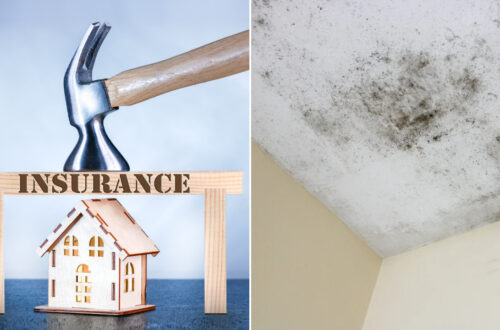

California homeowners can be charged for wildfire claims on properties they have never owned, visited, or insured. That is happening after the January 2025 Los Angeles fires.
A statewide insurance mechanism lets private insurers recover some of their contributions to California’s FAIR Plan from customers with ordinary policies. The resulting surcharge deserves careful public scrutiny because it adds another cost to households already absorbing steep insurance increases.
The $1 Billion Wildfire Insurance Assessment
The Palisades and Eaton fires produced enormous losses for California’s FAIR Plan, the basic property insurance option for people unable to find coverage in the conventional market. Participating insurance companies operate the plan under state law and provide additional financing when its claims obligations overwhelm available resources.
On February 11, 2025, Insurance Commissioner Ricardo Lara approved a $1 billion assessment on member insurers. The funding supported the plan’s ability to continue paying wildfire claims after reserves and reinsurance were strained.
Under the applicable rules, insurers can seek approval to recover up to 50% of that first $1 billion assessment through temporary fees on their own policyholders. The insurers must bear the remaining half themselves. The potential consumer share therefore reaches $500 million.
These charges can appear on policies issued outside the FAIR Plan. A homeowner in Sacramento with conventional coverage could help finance claims resulting from homes destroyed in Los Angeles County.
That reach is the significant development. A disaster concentrated in a few neighborhoods can create a specific, additional charge across a much wider insurance market. We believe policyholders deserve to know precisely how that charge was calculated and whose losses it helps cover.
How Much Are Homeowners Actually Paying?

There is no single statewide surcharge applied equally to every household. Each insurer must secure regulatory approval before collecting its permitted portion. Fees are generally calculated as a percentage of the relevant policy premium, so individual amounts vary.
In a July 2026 statement, the California Department of Insurance reported a median homeowners fee of $28 annually. The approved supplemental fees run over two years. That figure describes a median among affected homeowners; it should never be presented as a universal bill.
The context matters more than the seemingly modest amount. A recent analysis cited in our report on rising home insurance costs found a 46% national increase since 2021. That is a national estimate, and individual California households may face very different changes.
Consider a homeowner whose premium climbed from $2,000 to $3,000. A $28 assessment surcharge brings the annual bill to $3,028. The underlying premium increase itself already adds $1,000 each year.
We consider the accumulation of expenses the real affordability threat. Homeowners need the complete annual cost, including temporary charges, before deciding whether their budget can sustain adequate protection.
California’s FAIR Plan Is Getting More Expensive
Households insured directly through the FAIR Plan face another cost increase. For new and renewing residential policies effective from October 15, 2026, the plan implemented an average rate increase of 29.1%.
View this post on Instagram
KQED reported that increases vary sharply by property and wildfire exposure. Some high-risk policyholders could see premiums double. Other policyholders may receive reductions. The statewide average cannot predict an individual renewal notice.
FAIR Plan rate hikes and insurer assessment surcharges are separate charges that reveal growing pressure across California’s insurance system.
The Department of Insurance’s market snapshot, updated October 27, 2026, lists 677,449 FAIR Plan homeowner policies. The program is now responsible for protecting a substantial population of homes that struggle to find conventional coverage.
We regard that dependence as a market warning. The FAIR Plan was designed as a safety net. Heavy reliance on it concentrates property exposure inside an arrangement that can require more assessments following major catastrophes.
Should Homeowners Pay for Losses They Never Experienced?

Insurance depends on sharing losses across large groups of customers. Most policyholders pay premiums for years without making a major claim. Those payments help finance covered losses elsewhere, including fires, storms, and other disasters.
California’s assessment mechanism goes a step further by allowing insurers to recover some obligations arising from a separate insurance pool. That raises an important question about responsibility for extraordinary losses and the limits of transferring costs to customers.
The advocacy group Consumer Watchdog challenged the surcharges, arguing that member insurers should absorb the FAIR Plan assessment themselves. A Los Angeles County Superior Court ruling issued at the end of June 2026 upheld the regulator’s authority. Consumer Watchdog said on July 1 that it was reviewing possible further legal action.
Regulators argue that the arrangement helps keep insurance companies financially capable of offering coverage in California. A functioning market is necessary for homeowners, mortgage lenders, and communities trying to rebuild after disasters.
Our concern is accountability. A fee can be legally authorized and still leave serious questions unanswered about the incentives it creates. Insurers collecting these charges should provide understandable calculations, firm collection periods, and clear disclosures to customers.
Regulators should publish measurable results, including whether more companies offer policies in distressed areas and homeowners find sustainable alternatives.
Insurance Availability Can Affect Property Values

Insurance affordability belongs in every serious assessment of a home’s ownership costs. A property’s purchase price tells buyers little about what coverage will cost over the next several years.
Imagine two similar houses offered at comparable prices. One qualifies for a conventional homeowners policy with broad coverage. The other needs FAIR Plan protection and a separate policy to address important gaps. The second buyer faces a more complicated insurance arrangement and potentially a significantly higher annual bill.
California’s insurance department offers guidance on Difference in Conditions policies, which can provide protections missing from basic FAIR Plan coverage, such as liability, theft, or certain water-related losses. Buyers should review exclusions and limits before assuming they have equivalent insurance.
Those differences can influence household affordability, purchasing decisions, and the number of people willing to bid on a property. The market effect depends on local demand, insurance options, and the size of the expense.
No fixed formula translates rising insurance expenses into lower property values. Nevertheless, costly or unavailable insurance can make homes harder to sell.
Insurance quotes should therefore be part of the due diligence before a buyer removes contingencies or commits to a mortgage.
What California Homeowners Should Check
Reviewing the declarations page and renewal notice is essential. Homeowners should ask their insurer or broker for a plain-language explanation of any unfamiliar charge.
Before renewing, check these four points:
- Assessment charges: Identify any FAIR Plan assessment recovery fee, its annual amount, and when collection is expected to end.
- Rebuilding limits: Confirm the dwelling limit reflects local reconstruction costs, current labor prices, and applicable building requirements.
- Coverage gaps: Review exclusions, deductibles, and whether a separate policy is needed alongside FAIR Plan protection.
- Available alternatives: Request quotes from conventional insurers and compare total premiums, deductibles, coverage limits, and company terms.
A lower premium can come with a deductible or exclusion that leaves the household exposed to a large loss. Examine the protection purchased for every dollar spent.
Budget pressure also extends beyond insurance. Our reporting on homeowners without maintenance budgets underscores the difficulty of funding inevitable repairs alongside higher recurring expenses.
Skipping coverage to solve a short-term cash problem can produce an enormous long-term financial problem. We would prioritize accurate replacement limits and essential liability protection during any cost review.
The Bigger Issue Is What Happens After the Next Fire
The $1 billion assessment helped California’s FAIR Plan meet obligations arising from the 2025 Los Angeles wildfires. Another major catastrophe could renew the pressure on insurers and their policyholders.
The Department of Housing and Urban Development allocated more than $1 billion to California to cover recovery costs not paid by insurance or other assistance following the 2018 wildfires that killed 103 people and damaged or destroyed more than 24,000 structures.
https://t.co/FO49aMviGv
— The National Desk (@TND) October 20, 2026
California needs a durable strategy built around reducing wildfire losses, increasing conventional insurance availability, and maintaining meaningful financial oversight. Repeated emergency assessments are a warning that the system remains vulnerable.
The $28 median annual surcharge is one visible piece of that problem. Its significance lies in the precedent: homeowners far from the disaster can receive another bill when catastrophe losses overwhelm the state’s last-resort insurance pool.
Policyholders deserve more than a temporary financing fix. They deserve a market capable of covering homes at sustainable prices.